Momma’s, do you get frustrated when you have to step in to quench another fuss from your children or stop a selfish tug of war for a silly toy? It is usually not a big deal to correct, but for some reason this behavior is annoying and has happened five times today. You feel like you are about to blow your top with a mommy fit. Yep, you know what that is, parents have fits too. When you see a negative behavior in your child, do not expect them to know the right thing to do, or the right way to respond to something. Your children have a growing brain and they are learning to deal with many emotions, so don’t expect them to use the right one all the time. Do you? It must be taught and shown by example. You are the example. The way they see you treat people, is the way they will treat people. Your reaction to things will be their reaction. More actions are caught than taught.
This can be done on purpose. Instead of constantly using discipline for something you see your child repeatedly doing, role play the right and wrong ways. You can use scripture and stories. Drop what you are doing and deal with it now. It is a heart issue that can be turned into a teaching time. Use it!
Two siblings are fighting over one toy. How do you resolve it? Take it away? Give it to the younger? Give it to the older or the one who had it first? Make them share? Use a timer? I think in terms of what this would look like in adults. I ask these questions: Was this toy a gift to one of the children, did they buy it, or was this toy one for the whole family to use? These are different issues. If the toy was given as a gift to one of the children or they bought it, it is their possession. They should have the right to say who plays with it and they should have the choice to share or not to share. One should be encouraged to share but not forced to share. Then you are making them lie and telling them that having someone else’s possession without permission is all right. If I went over and borrowed my neighbors lawn mower without asking, it would be wrong. If I ask, and he allows me to use it or does not want me to use it, that is his right as the owner. It is his lawn mower. It does not make him selfish or mean to want to take care of his possession. If he allows me to use it, I should know that I have a responsibility to take care of the mower and bring it back timely and in great shape. If I broke something, I should fix it or replace it. These are life lessons we can teach early on.
If the toy is a gift or one the child bought, they have the right to share or not to share. Yes, we want them to share but it needs to be their choice. If it is special to them and the younger sibling is rough and breaks it, it may cause animosity and anger. If they have given permission willingly, their heart will be more accepting of an accident. How you respond to accidents in the home will be mirrored by your children also, you are their teacher in life. I have learned, when a special item is broken or harsh words come to mind, to ask myself the question, “Will this matter for eternity?” My child’s heart matters for eternity.
Mom is folding clothes and hears a scuffle going on over a toy for the sixth time today. Instead of lecturing about how silly it is to fight over a toy or that you are so “Done!” with the fussing…Stop! Pray under your breath for wisdom, smile and cheerfully tell everyone to gather in the living room, and state that we are going to play a game.
Character Role Play:
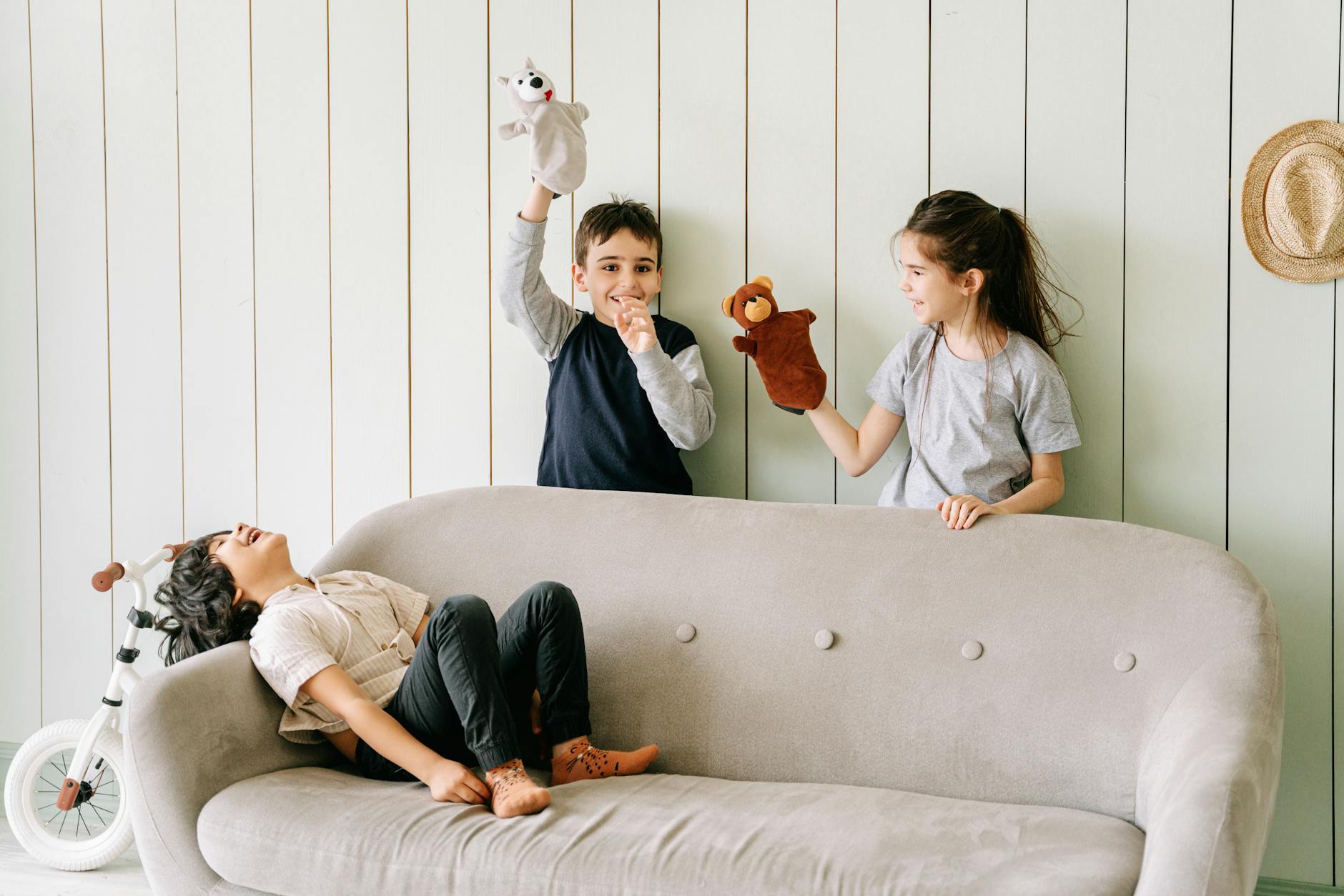
Gather your children together for a fun game. Mommy is going to show what the right and wrong ways to react to the circumstance will be. First, over act out what was going on when you stopped the children. You will need a helper like another child or your husband. Maybe the younger one was screaming and pulling on the toy, Mom gets to act it out. Don’t just act it out, make it look hilarious and over the top. You will have your children rolling on the floor laughing. Then stop and ask if this is the right way or wrong way to deal with this circumstance. They will all say, “Wrong Way!” with giggles and grins. Now is your chance to talk about possessions. If the toy belonged to the older child and she was worried it might get broken, you might show them how to redirect the child to another toy because “this toy is too big for you.” Or you could teach them to offer another toy, the child can also state that this toy was a gift and I don’t want it broken. If this doesn’t work, then they can go talk to Mom or Dad about it. They will have the authority to say, ” Sorry, this is not your toy, so you must give it back.” We also go over questions like: How would you feel if your sister took your special bear? How would you want to be treated?
What if the toy is something bought for the whole family to use. What would this look like in adult life? A person at work needing to use the same stapler or hole punch. Here is where we need to learn to put others ahead of ourselves or offer to bring it to them when we are finished with it, or you could allow them to use it first because it isn’t a priority for you right now.
Character Role play:
Gather your children together for a fun game. This is a family toy that can be used by anyone. So we are working with heart issues and teaching kindness and the right way to deal with conflict. Mom gets to, over the top, act out the situation amongst the laughs and giggles of the children. While kicking and screaming “I had the toy first!!”, you can stop and ask the silly question, “Is this the right way or wrong way to act?” Now you can ask them “What would be the right way?” There are multiple right options and if they come up with them, it means they are thinking and engaged. Ideas given might be: you can put others ahead of yourself and share right then, you can ask for 5 more minutes with the toy and then you will share it, or you can play together. These are all good options of the right way to deal with things. When the children are finished brainstorming, you can add options they didn’t think about, then you let them take turns acting the wrong way and the right ways. This is hysterical and relationship building. You are learning together about something important. These are the times to draw wisdom from scripture. Using scripture while you are giggling and learning together builds a love for God’s word and draws your family together. We use it to teach the correct way to respond in obedience to parents or other adults. If a teen is currently engulfed in a book and you need them to do their chores or help with a task, you may be aware of what they are doing or not, the response should be the same. They should be respectful and honoring in their speech and actions. I call from the other room, “Caleb, will you take the garbage out?” He can drop his book and immediately obey or he has the option to say, “Yes, Ma’am, is it ok if I finish this page or chapter first?” I usually let them finish the chapter because of their polite speech and their willingness to obey. If they whine or complain, they know from our role playing game that they will not have the option to finish. We have practiced the right and the wrong way to respond to an adult. They can also respectfully disagree with a decision we have made by not whining and complaining but addressing us in a polite manner with their own idea or solution.
Those who have children with special needs know that there are many physical, mental, and social cues that the child may not understand and they need to be practiced. Playing these kinds of games to help them deal with these conflicts can be part of a daily morning routine. I have used it in my home to help a child learn many things including: personal space, kindness, table manners, empathy, and so on. I act out the negative behavior and then we practice the right behavior all week during school time.
Learning how to be polite takes practice or a constant visual example: teach them how to open doors for people, give up their seat to another, offer assistance to someone who is struggling with their groceries, or other ways to serve others. Never take for granted that your children should know how to respond the right way in any situation. If you haven’t shown them or lived it out in front of them, they may not know what to do. Our sin nature takes over at times in stressful situations, so do not expect your children to know what to do. God is merciful to us and He has given us an example of His care for us and others. The best thing you can do for your child when you blow up or mess up, is to go to them, admit your wrong doing and what you should have done, and ask for forgiveness. They might even giggle and add that you might need to play the Character Role Playing Game.

 Penny Homeschooling
Leave a comment